Apply Now for the 2027 Youth Tour Leadership Program!
Phone: (352) 793-3801
Phone: (352) 793-3801

Safety is an important priority and value at SECO Energy. Our employees wear protective gear when working around power lines and use equipment designed for working with electricity. However, electrical safety applies to everyone. Electric energy can burn, injure, and even kill unless you respect it and exercise caution when working or playing around it.
Always consider all overhead lines to be live and dangerous.
Do not allow kids to play near substations or underground transformers.
Keep ladders and trimmers at least 10 feet away from power lines.
Survey the job site carefully before work begins and look for potential safety problems.
If you are in a car accident involving downed electrical wires, stay in the vehicle.
Stay away from and report power lines that have fallen down.
Unplug appliances before cleaning or servicing them.
Repair or replace frayed cords and never run under rugs or around sharp corners.
If an appliance smokes, sparks, or shocks, stop using it immediately. Repair or replace.
Never touch a person who is being shocked by electricity.
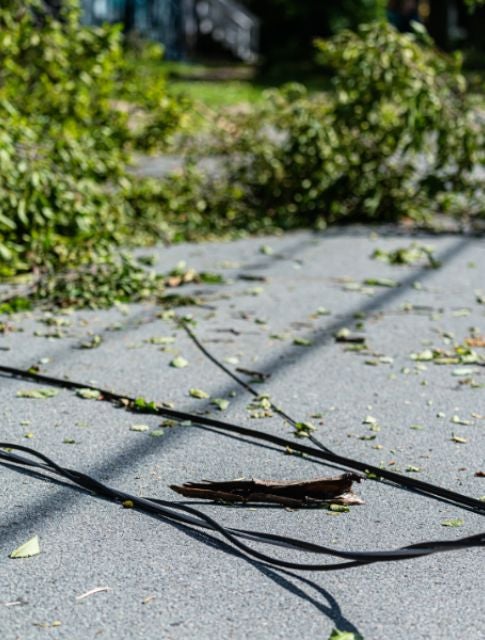
After a storm, drive carefully – watch for downed or dangling electric wires.
Before you buy or install a generator, know how to safely operate it.

Never climb trees around electrical wires.
Never touch outdoor wires with any part of your body, toys, or other objects.
Keep kites, toy planes and balloons a safe distance from poles and wires.
Do not enter or play near substations or underground transformers.
Call 811 or visit Sunshine 811.com to use the location service to mark utility infrastructure.
Stay away from downed power lines and report them immediately.
Never touch electrical equipment or lines—assume they are energized.
Call 811 before digging to have underground utilities marked. It’s free and required by law

Crane operations near overhead power lines must follow OSHA 29 CFR 1926 Subpart CC requirements. Maintain a minimum 10-foot clearance from lines up to 50 kV, with greater distances required for higher voltages.
Electricity can arc without direct contact, making proper clearance critical to prevent serious injury, outages, and equipment damage. Always identify nearby lines, establish safe work zones, and use a spotter when working close to minimum clearance limits.
Contact SECO Energy in advance to coordinate safe work practices when operating near power lines.
Private underground facilities can be located anywhere including private property and rights-of-way. They typically are underground lines that extend beyond the meter or lines not connected to a meter that serve other areas on a property.
Privately owned (not utility owned) facilities are the homeowners’ obligation to mark before excavation begins. Always put safety first around electricity.